The Academy
Five weeks of immersion in the heart of the operatic profession — where learning is transmitted through practice, and where practice finds its meaning in front of an audience.
Learning in front of an audience, not just in front of a mirror.
The ICAV Academy welcomes a cohort of approximately twenty international young artists each summer. Singers, conductors, vocal coaches, and collaborative pianists — four disciplines working together, in the same room, before the same mentors.
The pedagogy is rooted in professional practice. Each day alternates between masterclasses, individual coaching sessions, piano score reading, and stage and language workshops. The guidance is demanding; it is also warm — all of the mentors were, at one time, participants just like those they now support.
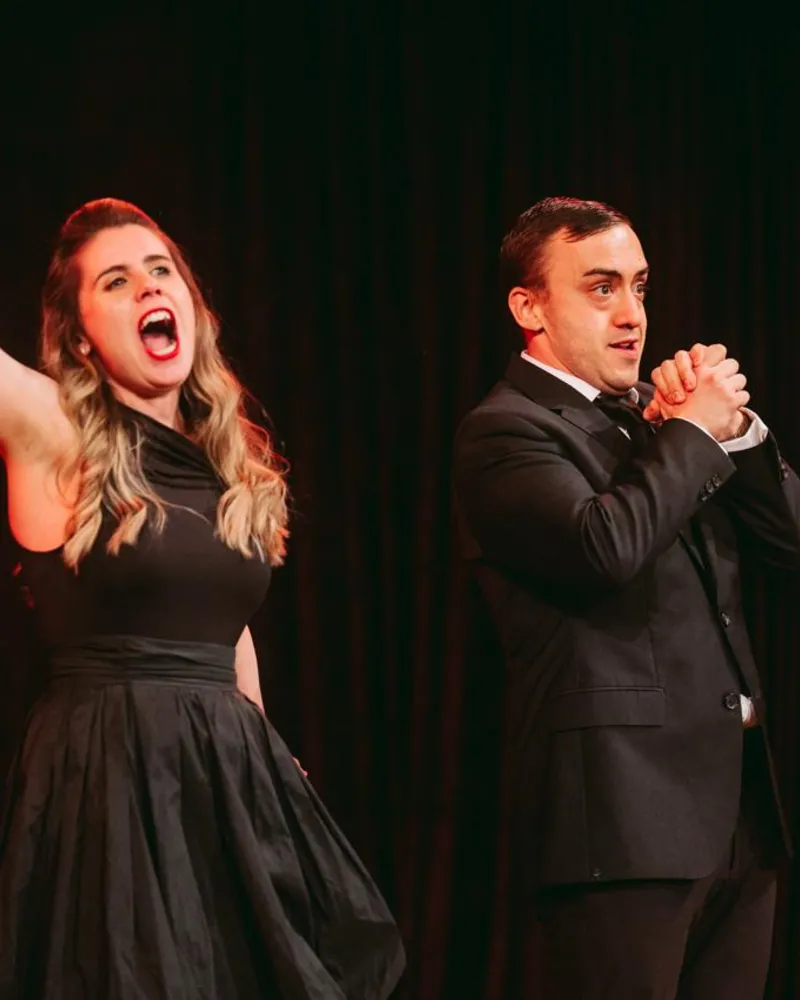
What sets ICAV apart is the inseparability of training and performance. The Academy is not a school that prepares students for a hypothetical concert: from the very first week, it is connected to the public season of the Concerts Lyriques. The repertoire studied in class is the same repertoire that will be performed on a Montreal stage just days later. The classroom opens to the public, and the singing begins.
From Baroque repertoire to grand Italian opera, from French mélodie to lieder: the Academy does not train a particular voice type or style — it trains complete artists, capable of inhabiting a text, a language, a score, an audience.
The Concerts Lyriques share the same season, the same mentors, and the same summer schedule.
Singers
At the heart of the Academy: the voice, and the way in which it is constructed as an instrument and as a language.
- Soprano
- Mezzo-soprano
- Contralto
- Ténor
- Baryton
- Basse
- Contre-ténor
The singing fellows work on a repertoire chosen with their mentor at the beginning of the session — opera aria, art song, oratorio. The vocal work itself is inseparable from the dramatic, linguistic and stylistic work: one sings a text, in a language, in a period, for an audience.
Each intern benefits from individual sessions with a vocal coach, regular piano accompaniment, and stage workshops. The masterclasses bring the entire cohort together around a guest mentor — five to six interns work in public, in front of their colleagues. It is demanding; it is also the moment when the Academy becomes a community.
Conductors
A training where conducting is worked in front of singers, pianists and mentors — not just in front of a score.

The conductors admitted to the Academy are few — two to three per session. The practical conducting portion is central: they conduct our singers and pianists daily on major opera excerpts that will be performed in concert a few days later with orchestra. No simulation, no fictional ensemble: real work, under a mentor's watchful eye.
The program combines score analysis, conducting technique, rehearsal technique, and ear training.
Accompanying pianists
A discipline often invisible from the audience, but crucial behind the scenes: bringing a voice to life, score by score.

The accompanying pianist is the singer’s privileged partner: he prepares the role, the text, the language, the diction and the style — hour after hour, score after score. At the Academy, coaches in training take charge of a small number of trainee singers for the entire duration of the session and support them in their audition repertoire.
The program includes sessions supervised by mentor coaches active on major opera stages and regular work on standard repertoire. The accompanying pianists will also attend the trainee singers’ voice lessons in order to support them in their vocal repertoire and understand the challenges and issues of vocal technique. It is also an opportunity to build, from the very start of the training, the professional network that will shape the career.
The artists who direct and coach the Academy's graduating classes.
See the schedule of Opera Concerts
The Academy Fellows
Discover the operatic artists who make up the 2026 cohort of the ICAV Academy.